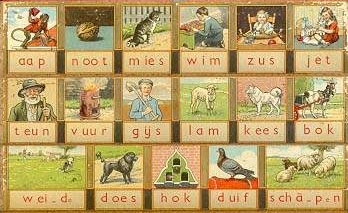
Our use of language: Dutch, English, and the formal ‘U’
Between us we speak a good many languages. Dutch is the everyday one, and for much of our team it is the mother tongue. So legal advice and help on Dutch nationality can always be given in Dutch or in English, whichever suits you.
The main language of this website is English, and you will sometimes find more on the English pages than on the Dutch ones. Not only because our head office is in England, but mostly because there are a great many (former) Dutch nationals outside the Netherlands whose Dutch has faded, or who never spoke it at all. Those are exactly the people who find it hardest to use their rights on their own. Dutch speakers do not always find this material easy either, but for someone who reads no Dutch it is far harder — and they too have rights, families and ties to the Netherlands. So English is very welcome here.
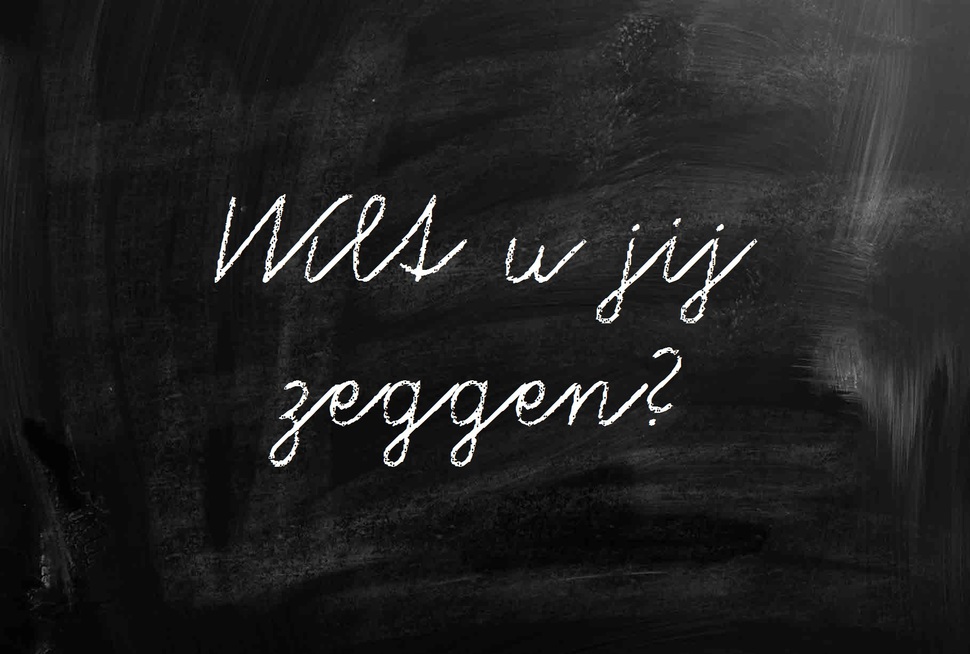
‘U’, and the long ij.
If you read our Dutch pages you will notice that we still address you as U, with a capital. Dutch has a formal u and an informal je, much as French has vous and tu, and we think the formal one still shows respect for the person on the other side. In the Netherlands the capital U has already given way to a lower-case u, and in daily speech it is mostly je, jij and jullie. Language moves with the times. The arrival of computers is what saw off our handsome long ij. We are not going to be silly about it and write to you in Middle Dutch, however good the linguistic joke: it would confuse everyone and serve nobody. We do keep up with the times, and if you would rather we used je, jij or jullie, that is entirely fine and we will. Out of respect for all of you, though, we still start with U.
P.S. our apologies if our grammar is not always quite write.