
Published 30 September 2025
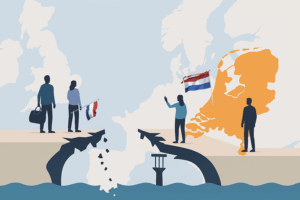
Let me start with a few frustrations about this newly released draft proposal. It proposes far more changes than the current government initially announced. Why go beyond the coalition agreement of the PVV, VVD, NSC, and BBB? And why exclude reasonable reforms that even some far-right politicians have said to support? This proposal doesn’t just make it harder for immigrants to become Dutch — it also deliberately disadvantages (former) Dutch nationals. That’s not reform. That’s regression.
📌 Status of the Draft Proposal
This is not yet a formal bill before Parliament. It’s currently in the consultation phase, open until 01 December 2025. Anyone can respond — and I urge you to do so. Better yet, ask a representative organization to submit a response on your behalf. Organizations can amplify your voice by citing (membership) numbers and providing well-researched, evidence-based critiques. If you can’t find one, submit your own response. Every voice counts. For immigrants I can not recommend an organisation, can you?
For former Dutch nationals, consider reaching out to:
- Stichting GOED — generally more effective in advocacy and instigating real changes
- Nederlanders in den Vreemde — likely to collaborate with the Stiching GOED and SNBN
- SNBN — more politically engaged
Why not support/contact both the Stichting GOED and the SNBN? While the Stichting GOED is more effective in general, the SNBN has a more political side. Together, they cover both strategic and political angles.
🔗 Link to Consultation here
🕰️ Naturalisation: From 5 to 10 Years
Aspiring Dutch nationals will need 10 years of residency instead of 5 before applying for naturalisation. Rather than debating the shaky rationale behind this, let’s focus on what it means in practice. If you currently qualify, apply as soon as possible. The draft law states that applications submitted before the law changes will be processed under the current law. For this now you must meet the basic requirements at the time of application:
- 5 years of lawful residency
- Integration exam (currently A2 level)
If you’re missing a document or awaiting legalization, you can still submit your application. You may receive a warning of possible rejection, but you’ll have time to provide the missing paperwork. The government cannot refuse your application unless you fail to pay the fee. Stay alert. The legislative process takes time — but don’t wait too long.
🔒 Stopping the indirect legal route to dual nationality
This proposal revives a previous attempt to close a (risky) legal loophole. Here’s how it works today:
- A person becomes Dutch through naturalisation.
- Before being reminded to renounce their other nationality, they themselves renounce Dutch nationality.
- They become a foreigner again, reinstate their residence permit, and reapply (after a year) via the Option procedure — regaining Dutch nationality while this time keeping dual citizenship.
This route is now again under threat and I don’t expect this possibility will remain, unless there is a real modernisation of the law, see below. I’ve always warned clients about the risks of this strategy. But for some, it was worth trying. For British nationals we already saw more and more municipalities rejecting Article 50 residency for an Option earlier than a year later. If this law passes, the time needed (1 to 2 years) is very likely not sufficient. Get legal advice before pursuing this route. A failed attempt doesn’t mean you can’t reapply later — but it may cost you time and money.
🌍 Former Dutch Nationals: Exemption Removed
Currently, former Dutch nationals living abroad (in 3rd countries) are exempt from the residency requirement when applying for naturalisation. The proposal reasons that you can/should return to the Netherlands and live there for a year before becoming Dutch again. For many, that’s simply not practically feasible. This means that naturalisation for former Dutch nationals will no longer be possible from abroad. This is a move contrary to all the previous political promises to make it easier for former Dutch nationals to get their Dutch nationality back. Together with the absence of any other promised repair possibilities it is a strong indication that the current government and parties, including the government lawyers who drafted this proposal, have no such real intentions.
Moving back to the Netherlands for repair of nationality? Yes, we help such clients. But even those born and raised in the Netherlands can face challenges getting the residence permit for former Dutch nationals. Those born and raised abroad are mostly denied such a residence permit. And immigration law ignores/forgot those who were born in the Netherlands, and (partially) raised abroad, or born abroad and (partially) raised in the Netherlands. Where nationality law makes no difference, immigration law clearly discriminates here. Ambiguous regulations on this give immigration officers wide discretion, and we’re seeing more refusals than previously. I wonder why? This proposal will only worsen that trend.
💔 Marriage to a Dutch National: Now 5 Years of Residency
Currently, spouses of Dutch nationals can apply for naturalisation after 3 years of marriage and cohabitation — even abroad. Under the new proposal, they’ll need 5 years of lawful residency in the Netherlands first. Time spent living together abroad will thus no longer count. This means:
First you need to live in the Netherlands, and then if married or cohabiting as a couple, for 3+ years, you can apply for naturalisation after 5 years of residency in the Netherlands. Some couples are internationally mobile but any time you lived previously in the Netherlands won’t be counted towards the required 5 years of residency.
In the past politicians and lawmakers argued that the law was meant to allow the unity of nationality within the family unit (gezin), this clearly steers away from that. In these troubling times couples may now choose to relocate to the Netherlands just to ensure their unity in nationality. Is this what the politicians want? An influx of families? If you qualify under current law, consider applying before the changes take effect. More on the current possibilities in my YouTube video here.
🔁 The Returning Immigrant
Under current law, immigrants who previously lived in the Netherlands for 10 or more years, left, and later returned could apply for naturalisation after 2 years of residency upon returning. The new proposal increases this to 5 years — a significant setback for those who already have deep ties to Dutch society.
❌ What’s Missing – Former Dutch Nationals
Politicians have long promised to make it easier for former Dutch nationals to get their nationality back — many of whom lost their nationality automatically and unknowingly. Yet this draft proposal offers no such solutions and is suspiciously silent on the issue.
Instead, as said, it even makes things worse. By restricting naturalisation to those physically residing in the Netherlands, it reduces the already limited pathways for former Dutch nationals abroad to reclaim their stripped identity and bonds to their country of birth and family.
The language used with the proposal focuses heavily on new immigrants and refugees, ignoring the very people who were once (born) Dutch. This echoes past law changes in 1985 and 2003, where xenophobic fears drove reforms that ultimately harmed Dutch nationals themselves. The victims of those changes remain overlooked. The 2016 National Ombudsman report? Ignored. Promises? Forgotten.
⏳ Timing and What’s Next
The consultation phase ends on 01 December 2025. While the government could close the consultation early that’s not usual. Realistically, this proposal won’t reach Parliament until after the elections and end of consultation.
If you qualify for naturalisation now, submit your application asap, best before the end of the year. Even if the law is fast-tracked, it’s very unlikely to take effect before 2026 — but in uncertain times, nothing is guaranteed. It’s also possible the proposal could be delayed, revised, or rejected entirely. Your voice can make a difference. The following can delay or cancel the (draft) proposal:
- Elections
An earlier draft proposal was shelved due to the last elections. If progressive parties like GroenLinks-PvdA and D66 win, this new proposal might be dropped again. But beware: the current government may try to push it through as part of its political branding — even as a caretaker government, before a new coalition forms. - The Senate (Eerste Kamer)
In 2017, the Senate rejected a proposal to extend the naturalisation period from 5 to 7 years. That precedent matters. If the House of Representatives (Tweede Kamer) passes this new proposal, the Senate could still block it — but only if we make enough noise. Be vocal. Be visible. - The 2016 Proposal: A Path Forward?
D66 has revived once again its 2016 proposal to modernise Dutch nationality law — and this time, GroenLinks-PvdA supports it. This time it seems that there is a real possibility for this to be seriously considered because of GroenLinks-PvdA. If GroenLinks-PvdA gain enough seats, real change is possible. D66 was not able/willing to do this previously. This proposal would finally allow dual nationality, aligning the Netherlands with most modern democracies. It doesn’t (yet) address the naturalisation period or the other issues raised above. However, it’s a formal proposal/bill already on the table. Let’s hope that both proposals could be discussed together. Since the outdated principles of 1892, Dutch nationality law has lagged behind. Since WW2 most European and many other countries have already modernised their laws allowing dual nationality. The 2016 proposal offers a chance to catch up to reflect the reality of a modern globalised world.
🌍 Dual Nationality: A Misunderstood Debate
Allowing dual nationality isn’t about encouraging immigration — it’s about respecting identity and allowing mobility. Ironically, restricting dual nationality locks people in. Once someone qualifies for naturalisation, dual nationality doesn’t change things for the country — but it does give the people flexibility. If anything, it makes it easier for people to leave. If the far right wants those of foreign origins out they are better served by allowing dual nationality, because then those people could actually leave much easier.
The burden of the old-fashioned principles in our law falls really on Dutch nationals abroad. They continue to lose their nationality automatically. Often unwillingly and unknowingly. These are people actually contributing to the Netherlands through work, trade, and commercial diplomacy — much like during the VOC. Why alienate them? It’s time to stop stripping Dutch nationals of their identity. It’s time to listen.
🗣️ What You Can Do — And Why It Matters
This draft proposal is more than an adjustment. It’s a step backward — one that risks alienating immigrants, former Dutch nationals, and current Dutch citizens abroad. It undermines family unity, global mobility, and the promise of a fair and inclusive nationality law. But it’s not law yet. And that means we still have a voice.
- ✅ Respond to the Consultation
Submit your feedback before 01 December 2025. If possible, ask a representative organization to do it on your behalf — they can amplify your voice with data, legal expertise, and political weight.
🔗 Link to Consultation here - ✅ Apply Now If You Qualify
If you meet the current requirements for naturalisation, don’t wait. Apply before the law changes. Protect your rights while you still can. - ✅ Vote for Change
The upcoming elections matter. Support parties that stand for inclusion, fairness, and modernisation of Dutch nationality law (GroenLinks-PvdA). Your vote could help stop this proposal — and/or support a better one. - ✅ Share This
Talk to your friends, family, colleagues. Post on social media. Reach out to journalists and politicians. The more people know, the harder it becomes to ignore.
This post reflects the position on 30 September 2025. The law and the practice may have moved on since.